

BOSTON, Massachusetts: A federal judge has invalidated a $100,000 fee imposed by President Donald Trump on new H-1B visas, ruling that the charge amounted to a tax that was never authorized by Congress.
U.S. District Judge Leo Sorokin issued the decision Monday in a lawsuit brought by 20 Democratic state attorneys general challenging the fee, which Trump announced in September and which sharply increased the cost of obtaining H-1B visas for highly skilled foreign workers.
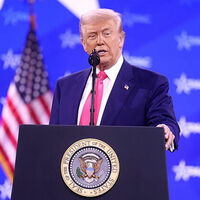
The administration had argued that the payment was a lawful penalty authorized under federal immigration law, which allows a president to restrict the entry of certain foreign nationals if their admission is deemed "detrimental to the interests of the United States."
Sorokin rejected that argument, concluding that the charge functioned as a tax rather than a penalty and therefore could not be imposed without congressional approval.
"Here, the substance and application of the $100,000 payment reveal that it is a tax, regardless of what the payment is called," wrote Sorokin, who was appointed by former President Barack Obama.
The judge said the U.S. State Department and U.S. Citizenship and Immigration Services lacked authority to implement the fee.
In his ruling, Sorokin cited a U.S. Supreme Court decision from February that struck down broad tariffs imposed by Trump under emergency powers. Applying the same reasoning, the judge said immigration law did not give the president authority to levy a tax.
The White House said it plans to challenge the decision.
"President Trump has clear legal authority to restrict entry of any class of aliens he determines is not in America's best interests, and that is exactly what he did," White House spokeswoman Taylor Rogers said in a statement.
The H-1B program allows U.S. employers to hire highly skilled foreign workers, particularly in technology and other specialized industries. The program provides 65,000 visas annually, with an additional 20,000 available for workers holding advanced degrees.
Before Trump's proclamation, employers typically paid between $2,000 and $5,000 in visa-related fees, depending on various factors.
The $100,000 fee did not apply to foreign nationals already in the United States on student visas, a group that generally accounts for a significant portion of new H-1B recipients.
According to court filings, the higher fee discouraged visa applications. The administration said in a March filing that U.S. Citizenship and Immigration Services had received only 85 payments of the $100,000 fee as of February 15.
The Trump administration has also introduced enhanced vetting requirements for H-1B applicants and proposed a new visa selection system that would favor workers with higher skills and salaries.
The fee has faced multiple legal challenges. In addition to the lawsuit brought by the state attorneys general, the U.S. Chamber of Commerce challenged the measure in court. The business group is currently appealing a December ruling by a judge in Washington, D.C., who rejected its argument that Trump lacked authority to impose the fee.