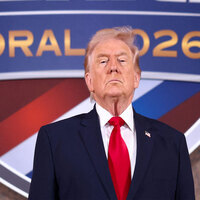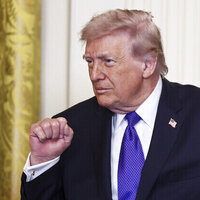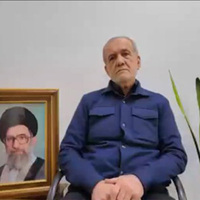



Even after the killing of Supreme Leader AyatollahAli Khameneiand devastating blows againstIranian forces on land, at sea and in the air, the crisis has quickly widened into a regional conflict that threatens a more prolonged US military engagement with fallout beyondTrumps control.
That is a scenario thatTrumphad avoided in his two terms in the White House, preferring swift, limited operations like the January 3 lightning raid inVenezuelaand Junes one-off strike onIrans nuclear sites.
Iranis a messy and potentially protracted military campaign, said Laura Blumenfeld of the Johns Hopkins School for Advanced International Studies in Washington. Trumpis risking the global economy, regional stability and his own Republican Party's performance in theUS midterm elections.
Trump, who came to office promising to keep the US out of "stupid military interventions, is now pursuing what many experts see as an open-ended war of choice unprompted by any imminent threat to the US fromIran, despite claims to the contrary by the president and his aides.
In doing so, analysts say he has struggled to articulate a detailed set of objectives or a clear endgame forOperation Epic Fury, the biggest US military operation since the 2003Iraqinvasion, offering shifting rationales for the war and definitions of what would constitute victory.
White House spokespersonAnna Kellyrejected that assessment, sayingTrumphas clearly outlined his goals to "destroyIrans ballistic missiles and production capacity, demolish their navy, end their ability to arm proxies, and prevent them from ever obtaining a nuclear weapon.
However, if the war drags on, American casualties mount and the economic costs of interruptedGulfoil flows multiply,Trumps biggest foreign policy gamble could also hurt hisRepublican Partypolitically.
IAEA finds no evidence of hits on Iran nuclear facilities, urges restraint
MAGA support holding, for now
Despite criticism from someTrumpsupporters opposed to military interventions, members of his Make America Great Again movement have largely backed him onIranso far.
But any softening of their support could imperil Republicans control of Congress in the November midterm elections, given opinion polls showing opposition to the war among the broader electorate, including a crucial bloc of independent voters.
The American people are not interested in repeating the mistakes of Iraq and Afghanistan, saidBrian Darling, a Republican strategist. The MAGA base is split between those who relied on no-new-war promises and ones who are loyal toTrumps judgment.
High on the list of analysts concerns is the mixed messaging fromTrumpand his aides on whether he is seeking regime change inTehran.
At the outset of the conflict, he suggested that overthrowingIrans rulers was a goal, at least by fomenting internal rebellion. Two days later, he stopped short of mentioning that as a priority.
But then on Thursday,Trumptold Reuters he would play a role in pickingIrans next leader and encouragedIranian Kurdish rebels to launch attacks. That was followed by his demand in a social media post on Friday forIrans "unconditional surrender."
Across the region, the dangers have escalated withIran's retaliatory strikes onIsraeland other neighbors as it seeks to sow chaos and raise the costs for Israel, the US and its allies.
Showing thatIranmay still be able to activate proxy groups, Lebanons Hezbollah militia has renewed hostilities with Israel, expanding the war to another country.
American casualties have been low so far, with six service members killed, andTrumphas largely shrugged off the prospects for more to come while declining to completely rule out deployment of US ground troops.
Asked whether Americans should worry aboutIran-inspired attacks at home,Trumpsaid in aTime magazineinterview published on Friday: I guess Like I said, some people will die.
But Jonathan Panikoff, a former deputy US national intelligence officer for theMiddle East, said: Nothing is likely to hasten an early end to the war more than American casualties Thats whatIranis counting on.
Venezuela miscalculation?
Many analysts believeTrump, who has shown an increasing appetite for military action in his second term, miscalculated that theIrancampaign would unfold like the Venezuela operation earlier this year.
US special forces captured Venezuelan PresidentNicolas Maduro, opening the way forTrumpto coerce more compliant former loyalists into giving him considerable sway over the countrys vast oil reserves without any extended US military action needed.
Trump says Venezuela's Maduro captured in 'large scale' US strike
By contrast,Iranhas proved a much tougher, better-armed foe with an entrenched clerical and security establishment.
Even the joint US-Israeli "decapitation" strike that killed Khamenei and some other senior leaders has failed so far to preventIranfrom mounting a military response and has raised questions whether they could be replaced by even more hardline figures.
Looming over the conflict, however, is whetherIrancould slide into chaos and break apart if its current rulers fall, further destabilizing the Middle East.
Mark Dubowitz, CEO of theFoundation for the Defense of Democracies, a nonprofit research institute considered hawkish onIran, praisedTrumps overall war strategy but said the president needs to make clear publicly that he does not want to see the country disintegrate.
Why Iran's 'beheaded' power structure may outlive Ali Khamenei
Oil chokepoint
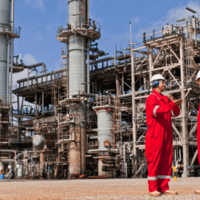
For now, however, one of the most pressing concerns isIrans threat to the Strait of Hormuz, the narrow chokepoint through which a fifth of the world's oil passes. Tanker traffic has halted, which could have grave economic consequences if it lasts.
ThoughTrumphas publicly dismissed any concern about already-rising US gas prices, he and his aides have scrambled for ways to mitigate the wars impact on energy supplies as voters tell pollsters that the cost of living is their top concern.
It's an economic pain point on the US economy that it seems was not fully anticipated," said Josh Lipsky at theAtlantic Councilthink tank in Washington.
One former US military official close to the US administration said the widening of the war's economic impact had caughtTrumps team by surprise in part because those with knowledge of oil markets were not consulted ahead of the attack onIran.
The White House's Kelly said, TheIranian regime is being absolutely crushed" but did not specifically address concerns about preparations for a war.
Trumpmade his decision to press ahead with the strikes despite warnings from some senior aides that the escalation could be difficult to contain, according to two White House officials and a Republican close to the administration.
Some traditional US allies were caught off guard. "It's a decision-making circle of one," said one Western diplomat.
With oil once again a weapon in the Middle East, is clean energy the key to peace?
The wars duration is a major unknown likely to determine the extent of its repercussions. With the price tag of theIrancampaign mounting by the day,Trumphas said that the operation could last four or five weeks or whatever it takes but has offered little explanation of what he envisions will follow.
Retired US Army Lieutenant General Ben Hodges, who served in Iraq andAfghanistanand formerly commanded the US Army in Europe, commended the US military for its tactics inIran. But he told Reuters: "From a political, strategic and diplomatic standpoint, it seems not to have been thought all the way through.
Trumpalso has a lot riding on helping oil-producing Gulf Arab states weather theIrancrisis given they have long hosted US bases and have made pledges of massive new US investments to him.
While Gulf allies appear to have fallen in line to support the campaign, especially after Tehran targeted them with missile and drone strikes, not everyone in the region is onboard withTrumps war.
In an open letter toTrumppublished on Thursday,UAEbillionaire Khalaf Al Habtor, a frequent visitor toTrump's Mar-a-Lago resort inFlorida, asked: "Who gave you the right to turn our region into a battlefield?"
(Reuters)
Originally published on RFI